Article: Quartz vs. Granite vs. Quartzite: Which Countertop Is Best for North Jersey Kitchens?
Quartz vs. Granite vs. Quartzite: Which Countertop Is Best for North Jersey Kitchens?
Quartz, granite and quartzite are the three most popular countertop choices in New Jersey kitchens, and the names are easy to mix up. At our Wharton, NJ warehouse we stock all three, so we hear the same questions every week: Which one is most durable? Which needs the least care? Which looks most like marble? This guide gives you straight answers so you can choose with confidence.
The short answer
- Choose quartz if you want the easiest care, a consistent look and a marble-style design without sealing.
- Choose granite if you want natural stone that handles heat well and a lot of value for the price.
- Choose quartzite if you want the luxury look of marble in a hard natural stone and you are fine with sealing it.
What is the difference?
Quartz: engineered stone
Quartz countertops are made in a factory from crushed natural quartz bound with resin and pigments. Because they are engineered, the color and pattern are consistent from slab to slab, and designers can create very realistic marble looks such as Calacatta and Taj Mahal. Quartz is non-porous, so it does not need sealing.
Granite: natural igneous stone
Granite is quarried from the earth and cut into slabs. Every slab is one of a kind, with natural speckles, swirls and movement. It is very hard and handles heat well, but it is porous and benefits from periodic sealing.
Quartzite: natural metamorphic stone
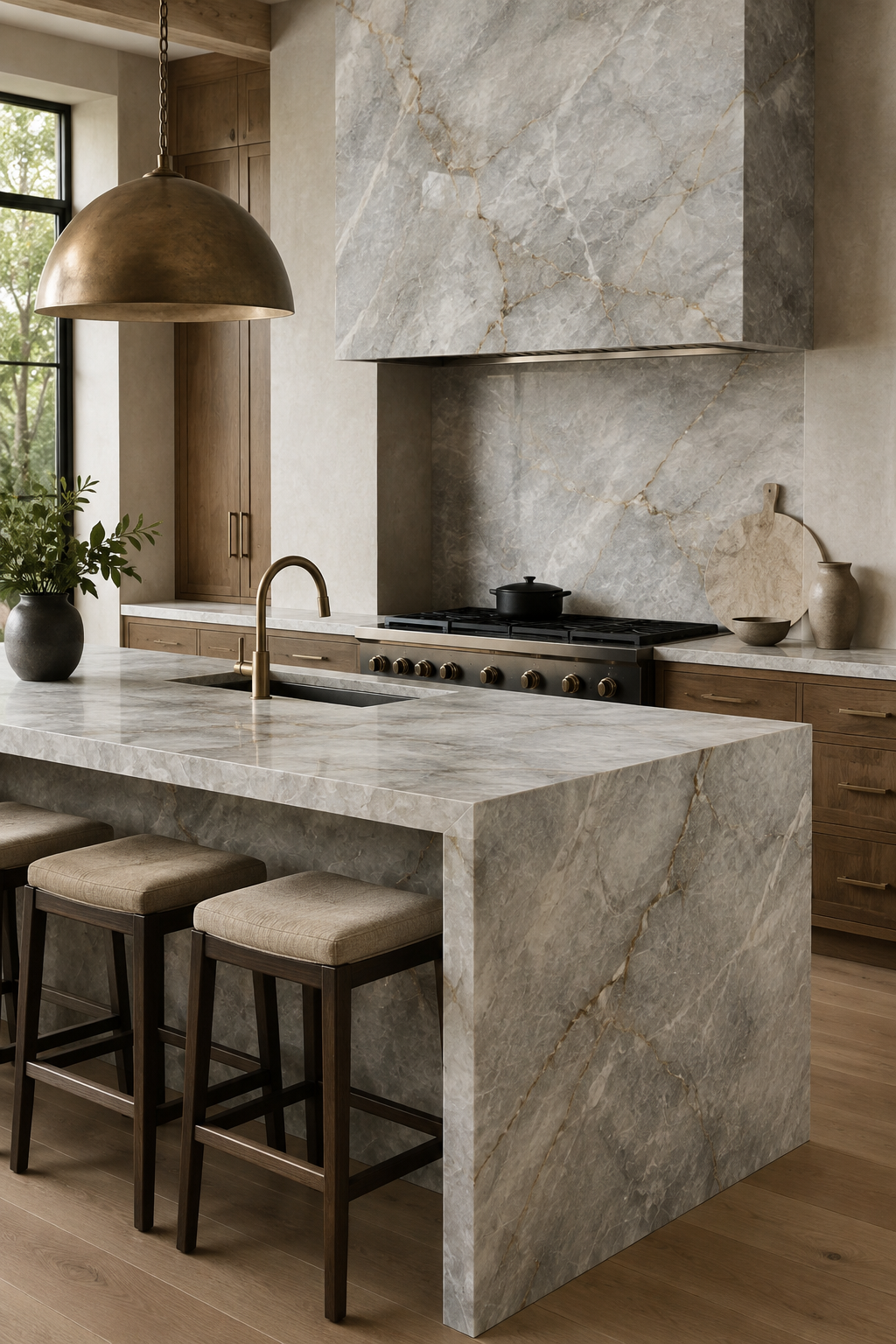
Quartzite forms when sandstone is transformed by heat and pressure. It is one of the hardest natural countertop stones and often has the soft, flowing veining people love in marble. Like granite, it is porous and should be sealed.
Do not confuse quartz with quartzite. Quartz is engineered; quartzite is 100% natural stone. The names are similar, but they behave differently.
Side-by-side comparison
| Quartz | Granite | Quartzite | |
|---|---|---|---|
| Type | Engineered | Natural stone | Natural stone |
| Look | Consistent; realistic marble looks | Speckled, unique patterns | Marble-like veining, unique |
| Sealing | Not needed | Recommended periodically | Recommended periodically |
| Stain resistance | Excellent | Good when sealed | Good when sealed |
| Heat resistance | Use trivets; resin can be damaged by very hot pans | Excellent | Excellent |
| Scratch resistance | Very good | Excellent | Excellent |
| Outdoor use | Not for direct sun (UV can affect resin) | Good choice | Good choice |
| Typical cost | Mid range | Often similar to quartz | Usually the highest of the three |
Durability and everyday use
All three are durable countertops that will last for decades in a normal kitchen. Granite and quartzite are harder and handle heat better, so you can be a little less careful with hot pans, although we still recommend trivets on any stone. Quartz has the edge for everyday spills: coffee, wine, tomato sauce and cooking oil will not soak in, which makes it a favorite for busy families with kids.
Maintenance
Quartz needs only warm water and mild soap. No sealing, ever. Granite and quartzite are also easy to clean, but they should be sealed when water stops beading on the surface. Your fabricator can seal the stone at installation and tell you how often to reseal.
Looks: which is best for a marble look?
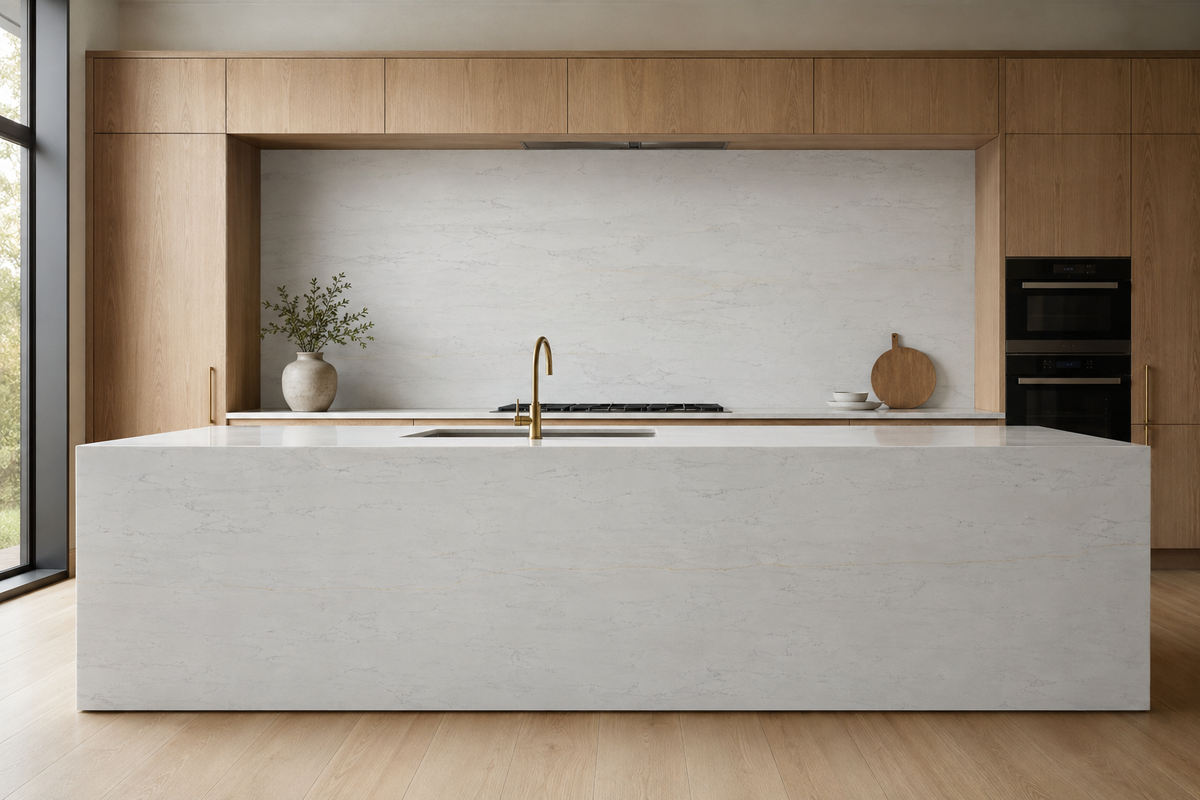
If you want the look of Carrara or Calacatta marble without marble's softness, you have two great options. Marble look quartz gives you a consistent, low-maintenance version at a lower price. Quartzite gives you natural, one-of-a-kind veining that many homeowners feel is closer to the real thing. Granite has a more traditional speckled look, although some modern granites are quite subtle.
Cost in New Jersey
Installed quartz countertops in North Jersey typically cost about $40 to $90 per square foot; see our full quartz countertop cost guide. Granite is often in a similar range, with entry-level colors among the most affordable stone options. Quartzite is usually the most expensive of the three because it is harder to quarry and fabricate. Exact prices depend on the color, slab size and your fabricator.
Which countertop fits your project?
- Busy family kitchen: quartz, for stain resistance and no sealing.
- Serious home cook who wants heat resistance: granite or quartzite.
- Luxury, marble look with natural stone: quartzite.
- Outdoor kitchen or patio bar: granite or quartzite, since direct sun can affect quartz resin.
- Rental or investment property: quartz or an entry-level granite for durability and value.
- Bathroom vanity: any of the three; quartz is the most popular for easy cleaning.
See all three side by side in Wharton, NJ
Photos only go so far. At our warehouse at 105 West Dewey Avenue, Building G, Suite 6, Wharton, NJ 07885, you can compare full slabs of quartz, granite and quartzite next to each other, and even hold up a cabinet door. Trade professionals can walk in Mon–Fri 8:30–4:30 and Sat 10–3; homeowners, please book a visit ahead.
Frequently asked questions
Is quartz or granite better for a kitchen?
Both are excellent. Quartz is better if you want no sealing and maximum stain resistance; granite is better if you want natural stone and higher heat resistance.
Is quartzite stronger than quartz?
Quartzite is a very hard natural stone and handles heat better than quartz. Quartz is non-porous and more stain resistant. Both are durable choices for kitchens.
Does quartz need to be sealed?
No. Quartz is non-porous and never needs sealing. Granite and quartzite should be sealed periodically.
Can I put a hot pan on a quartz countertop?
It is best not to. Very hot pans can damage the resin in quartz, so always use a trivet or hot pad.
Which countertop is best for an outdoor kitchen in New Jersey?
Granite or quartzite. Most quartz is designed for indoor use, and direct sunlight can affect the resin over time.
Still deciding? Browse quartz, granite and quartzite, request a quote or call (973) 307-0118.